

Vaping in Australia in 2026: Pharmacy Access, Safety and the Latest Rules
Short answer: Vaping is not an open retail market in Australia. Therapeutic vaping goods are regulated at the federal level and may only be supplied through lawful pharmacy and therapeutic pathways, subject to state and territory requirements. Ordinary vape shops, tobacconists and convenience stores cannot legally supply vapes. Always check current guidance before importing, supplying or using a product.
Australia’s vaping market has changed significantly over the last few years. Many adults have tried e-cigarettes, but the rules around supply, pharmacy access, importing and advertising are now much stricter than they were before 2024.
For adults trying to understand the current position, the most important distinction is this: personal use is different from commercial supply. A person may possess a vaping good for personal use in circumstances where a business would not be allowed to import, advertise, store or sell that same product.
This guide explains the main points in plain English. It is general information, not legal or medical advice.
Is vaping legal in Australia in 2026?
Vaping is regulated, not treated as an ordinary consumer retail category. The Therapeutic Goods Administration (TGA) regulates therapeutic vaping goods, including certain vaping substances, devices and accessories intended for smoking cessation or the management of nicotine dependence.
Under the current framework, therapeutic vaping goods can only be supplied through pharmacies and other authorised therapeutic pathways. Non-pharmacy retailers such as vape shops, tobacconists and convenience stores cannot supply vapes in Australia.
The exact requirements can depend on the product, its nicotine content, the purpose for which it is supplied and the laws of the relevant state or territory. Before relying on a product listing, import arrangement or wholesale offer, check the TGA guidance on the supply and distribution of therapeutic vaping goods.
Why did the rules change?
The Australian vaping reforms introduced a nationally consistent framework for the importation, domestic manufacture, supply, commercial possession and advertising of vaping goods. The reforms were designed to reduce youth access, control product quality and keep therapeutic access available for adults who need support with smoking cessation or nicotine dependence.
The TGA also states that the importation, manufacture, supply, commercial possession and advertising of disposable single-use and non-therapeutic vapes are prohibited under the relevant reforms.
That means a product being visible online does not automatically mean that it can be lawfully supplied in Australia. A website, marketplace listing or social media post is not proof that a product has entered the country through a lawful supply chain.
Can adults buy nicotine vapes from a pharmacy?
Adults aged 18 and over may be able to access certain therapeutic vaping goods through participating pharmacies, subject to pharmacist consultation, product requirements and state or territory law. Some products or concentrations may require a prescription or another authorised pathway.
- Speak with a pharmacist about smoking cessation or nicotine dependence.
- Discuss whether a therapeutic vaping product is appropriate.
- Confirm the product, nicotine concentration and supply pathway.
- Follow the pharmacist’s directions and the product’s safety information.
The rules are not a substitute for professional advice. If you are unsure about access, speak directly with a pharmacist or medical practitioner and check the latest information from the TGA.
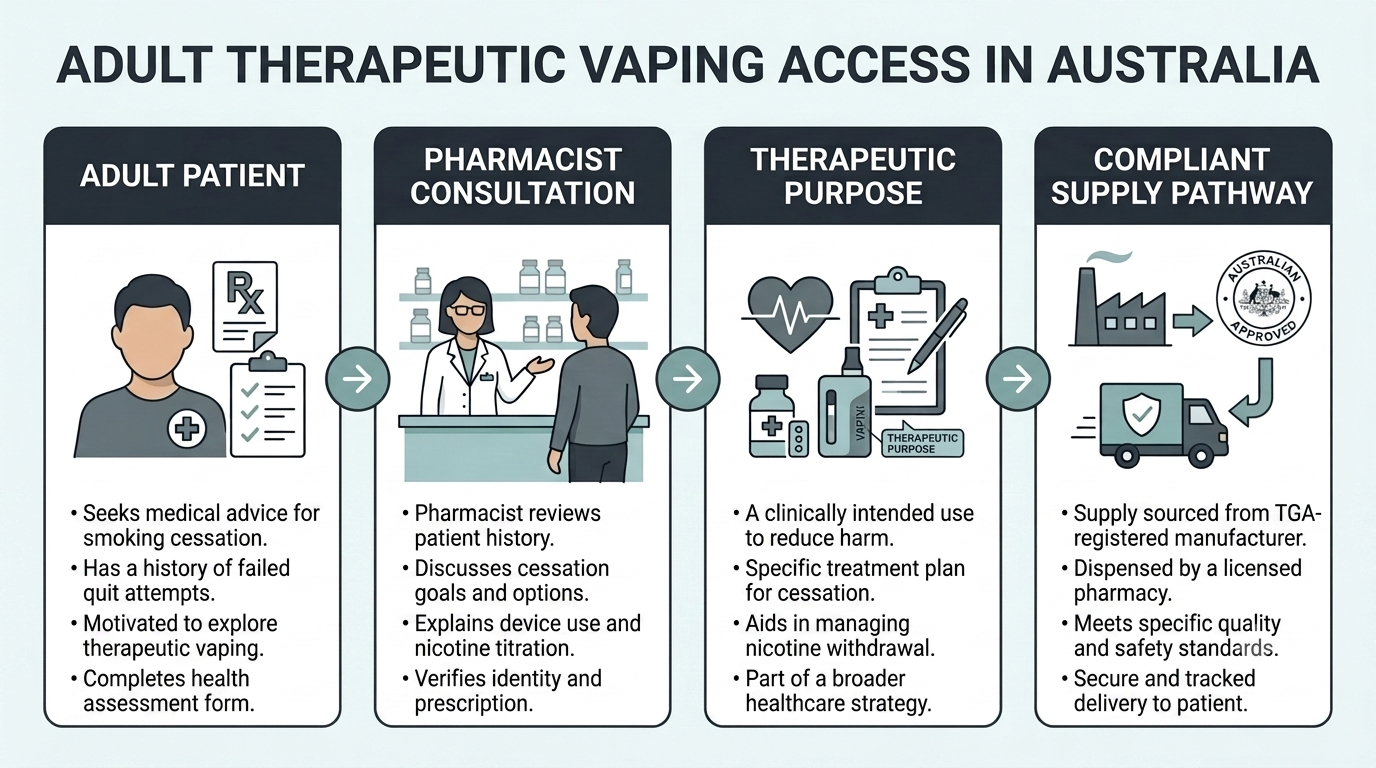
The four-step access pathway — text version
1 · Adult patient
- Seeks medical advice for smoking cessation
- Has a history of failed quit attempts
- Motivated to explore therapeutic vaping
- Completes a health assessment form
2 · Pharmacist consultation
- Pharmacist reviews patient history
- Discusses cessation goals and options
- Explains device use and nicotine titration
- Verifies identity and prescription
3 · Therapeutic purpose
- A clinically intended use to reduce harm
- Specific treatment plan for cessation
- Aids in managing nicotine withdrawal
- Part of a broader healthcare strategy
4 · Compliant supply pathway
- Supply sourced from a TGA-registered manufacturer
- Dispensed by a licensed pharmacy
- Meets specific quality and safety standards
- Secure and tracked delivery to the patient
General information only, not medical advice. Requirements vary by state and territory — check current TGA guidance.
Are vape shops allowed to sell vapes in Australia?
No. The TGA states that vapes cannot be supplied through non-pharmacy retail stores, including tobacconists, vape shops and convenience stores.
This is important for both consumers and businesses. A business should not assume that it can legally sell imported stock simply because the stock is already in Australia, because a product is nicotine-free, or because another website appears to be offering it.
For general customer questions, you can review the PuffCell VAPE FAQ or contact our team. These pages provide customer-service information only and do not replace legal or medical advice.
What should adults check before using a vaping product?
If a pharmacist or other authorised health professional supplies a product, follow their instructions and read the packaging carefully. Before using any vaping good, check:
- The product name and intended use.
- The nicotine concentration, if applicable.
- The batch or lot information and expiry date.
- The storage and charging instructions.
- Whether the device, pod or cartridge is damaged.
- Whether the product has been supplied through an authorised pathway.
Do not rely on claims such as “safe”, “harmless”, “approved” or “guaranteed to help you quit” unless those claims are supported and legally permitted. Long-term health effects are still not fully known, and vaping can cause nicotine dependence and other health risks.
For general health information, Healthdirect’s vaping guide explains known risks, nicotine dependence, liquid nicotine poisoning and when to seek medical help.
Vape battery and charging safety
Battery safety matters whether a device contains nicotine or not. A damaged or poorly handled battery can overheat, catch fire or cause injury.
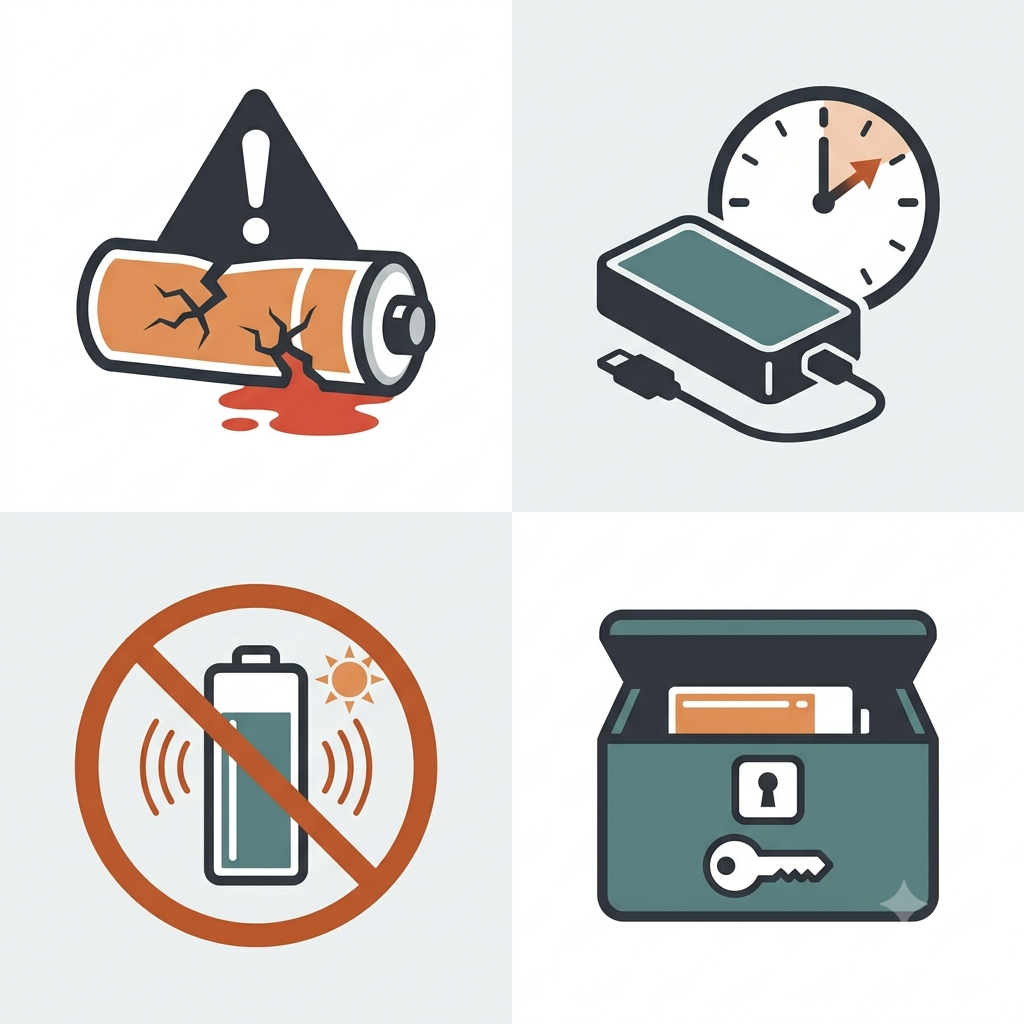
- Do not use a device with a swollen, cracked or visibly damaged battery.
- Use the charger and cable recommended for the device.
- Do not leave a device charging overnight or unattended for long periods.
- Keep devices away from direct sunlight, hot cars and other heat sources.
- Store vaping goods securely and out of reach of children and pets.
- Keep liquid nicotine away from skin, food and drinks.
If liquid nicotine is swallowed or comes into contact with skin, seek urgent medical advice. In Australia, the Poisons Information Centre can be reached on 13 11 26. Call 000 in a medical emergency.
What does the Australian vaping data show?
The latest national data should be read carefully. The Australian Institute of Health and Welfare reported that 6% of people aged 14 and over were current e-cigarette users in 2025, down from 7% in 2022–2023. The earlier survey found that current use was highest among 18–24-year-olds, but those results pre-dated the stronger restrictions introduced in 2024.
These figures show that vaping is a real public health and consumer issue in Australia, but they do not mean that vaping is an unrestricted or ordinary retail market. They also do not prove that a specific product is safe, legal or suitable for a particular person.
What should Australian retailers and wholesalers know?
Retailers and wholesalers should confirm the legal status of their business model before listing or promoting vaping goods. Important questions include:
- Is the business authorised to supply the relevant category of goods?
- Does the importer have the required licence or permit?
- Has the product been notified or otherwise supplied through the correct pathway?
- Does the product comply with current product, packaging and labelling requirements?
- Is the proposed marketing activity permitted?
Advertising is a separate issue from selling. The TGA says advertising of vaping goods is prohibited unless authorised, and the restriction can apply across websites, social media, sponsorships and other promotional channels. Read the TGA guidance on vaping advertising and promotion before publishing a campaign.
For logistics information, see the PuffCell VAPE shipping policy and Australia warehouse information. These pages explain operational details, but they do not confirm that a particular product or business model complies with Australian law.
Frequently asked questions
Can I order any vape product online in Australia?
No. The fact that a product can be found online does not mean it can be lawfully imported or supplied in Australia. Product type, nicotine content, intended purpose, importer status and the supply pathway all matter.
Can a tobacconist or vape shop sell vapes?
No. The TGA states that vapes cannot be supplied through non-pharmacy retail stores such as tobacconists, vape shops and convenience stores.
Can I use a vape to quit smoking?
Speak with a doctor, nurse practitioner or pharmacist about the options available to you. Do not treat a blog, product page or social media post as personalised medical advice.
Are nicotine-free vapes automatically legal?
Not necessarily. The legal position can depend on the product category, how it is imported or supplied, its intended use and state or territory requirements. Nicotine-free status alone is not a complete compliance check.
Where can I get reliable information?
Start with the Therapeutic Goods Administration, Healthdirect and a qualified Australian healthcare professional. Government requirements can change, so check the publication date of any online guide.
Final takeaway
Australia’s vaping environment in 2026 is tightly regulated. Adults looking for support with smoking cessation or nicotine dependence should speak with a pharmacist or medical practitioner. Businesses should verify their import, supply, storage and advertising obligations before offering vaping goods to Australian customers.
The safest approach is simple: use current official guidance, avoid unverified online claims and treat product safety and legal supply as separate questions.
This article provides general information only. It is not legal, medical or tax advice. Australian federal, state and territory requirements may change. Check the current official guidance before taking action.