Selling Vape Products in Poland
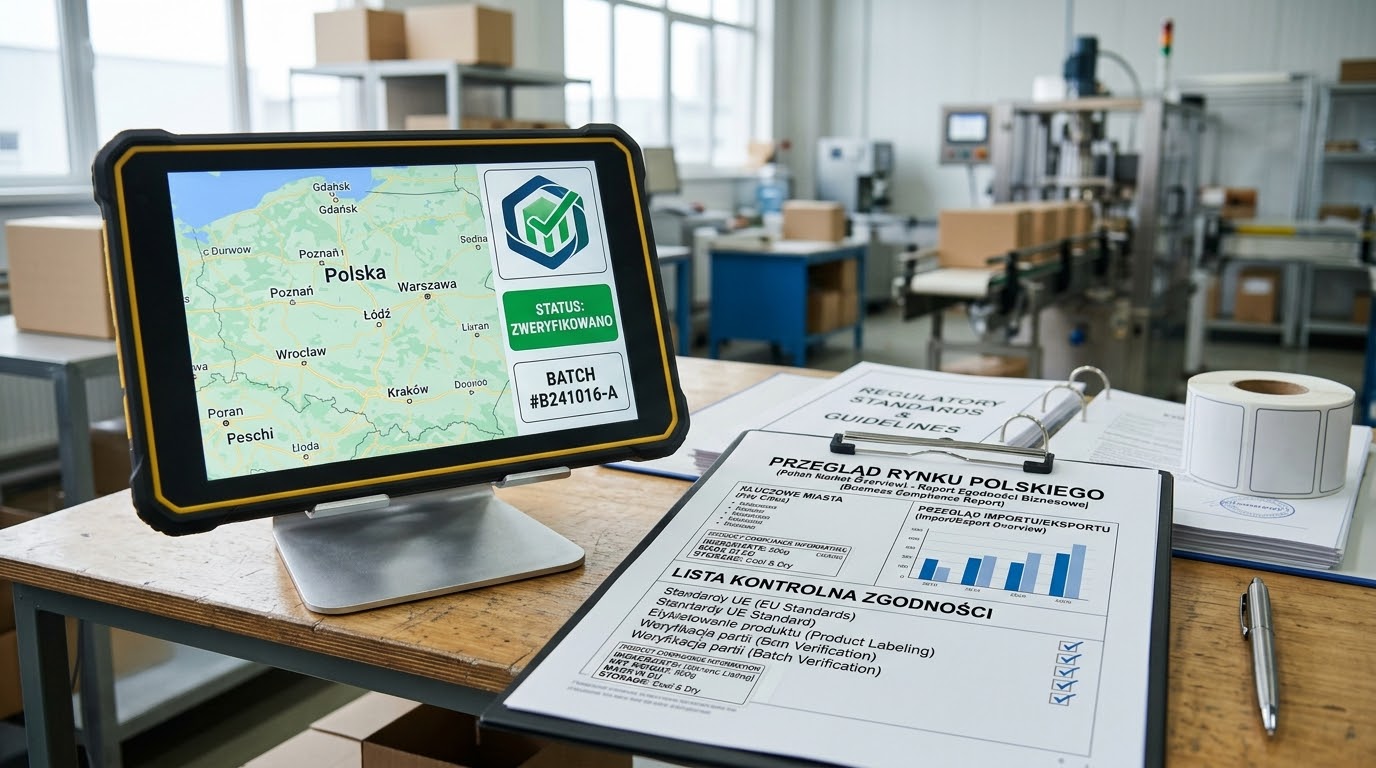
A pallet of refill containers cleared an EU warehouse, then stopped at a Polish depot over two missing lines: a Polish-language health warning on the carton and an excise registration number on the invoice. The devices were fine. The EU baseline was met; the national layer was not. Poland is an EU member state, so Directive 2014/40/EU (the TPD) applies in full, yet its transposition leaves taxation, language, notification fees and distance-sale rules to national law. This page covers only Poland-specific landing differences: the items to confirm, the channel holding each current value, and the evidence to file before the first 18+ sale. For the cross-market frame, see the EU vape wholesale compliance guide.
What the TPD settles, and what Poland decides for itself
Article 20 is the fixed floor. Article 20(2) requires a six-month pre-market notification to each Member State’s competent authority, with ingredients, emissions, toxicological data, nicotine dose and uptake, and device and production descriptions; EU-CEG under Commission Implementing Decision (EU) 2015/2183 is the common format. Article 20(3)(b) caps nicotine-containing liquid at 20 mg/ml (2%); Article 20(3)(a) caps tanks and cartridges at 2 ml and refill containers at 10 ml. Article 20(7) requires annual sales-volume and consumer-preference data; Article 20(9) covers suspected adverse effects and corrective measures. Commission Implementing Decision (EU) 2016/586 sets the child-resistant, tamper-evident, leak-free refill mechanism.
None of that changes at the Polish border. National law adds notification fees, excise duty and excise numbers, flavour restrictions, leaflet language, distance-selling conditions, advertising limits and 18+ age-verification mechanics. The Commission’s electronic cigarettes page and its implementing acts for Directive 2014/40/EU carry the EU instruments; the Polish transposition carries the rest. Keep both files separate, with the compliance basics for wholesale businesses as the reference.
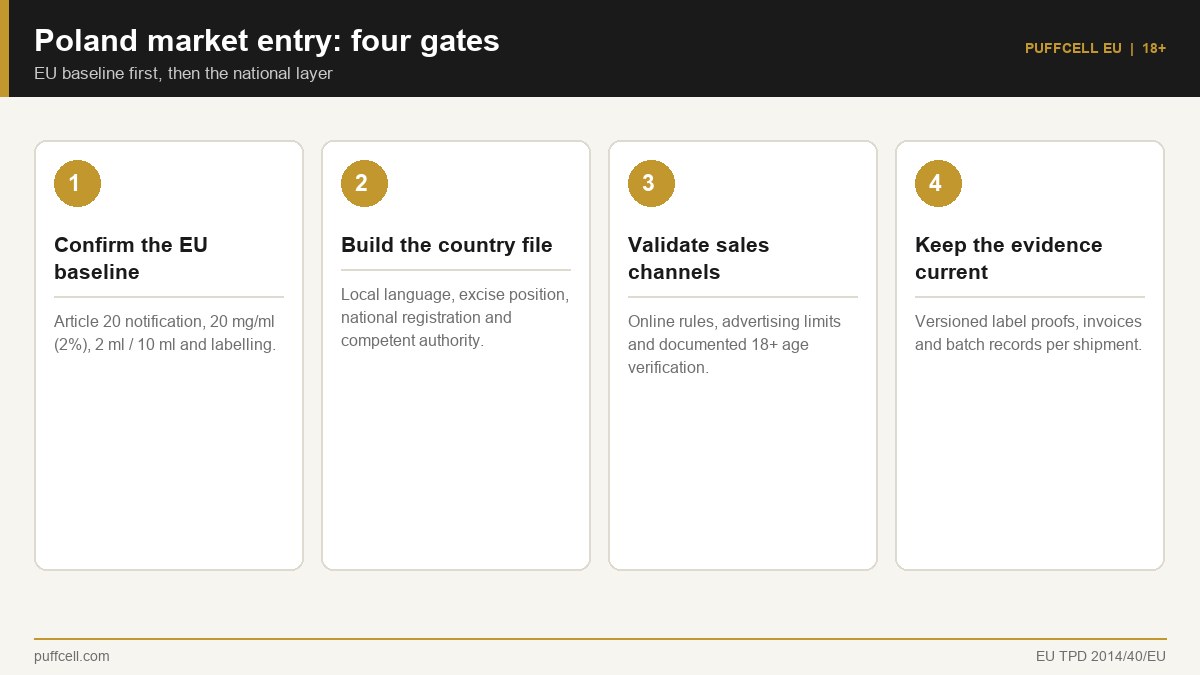
EU baseline versus Poland: the local verification table
The left column is the EU floor; the others give why the item diverges, the channel holding the current value, and the proof to retain. No Polish rate or fee is reproduced here: the authority publishes those, and the deliverable is a dated written confirmation. Mirror the columns in the product documentation retailer checklist.
| Item | Why it differs from the EU baseline | Who to confirm with (channel) | Evidence to keep |
|---|---|---|---|
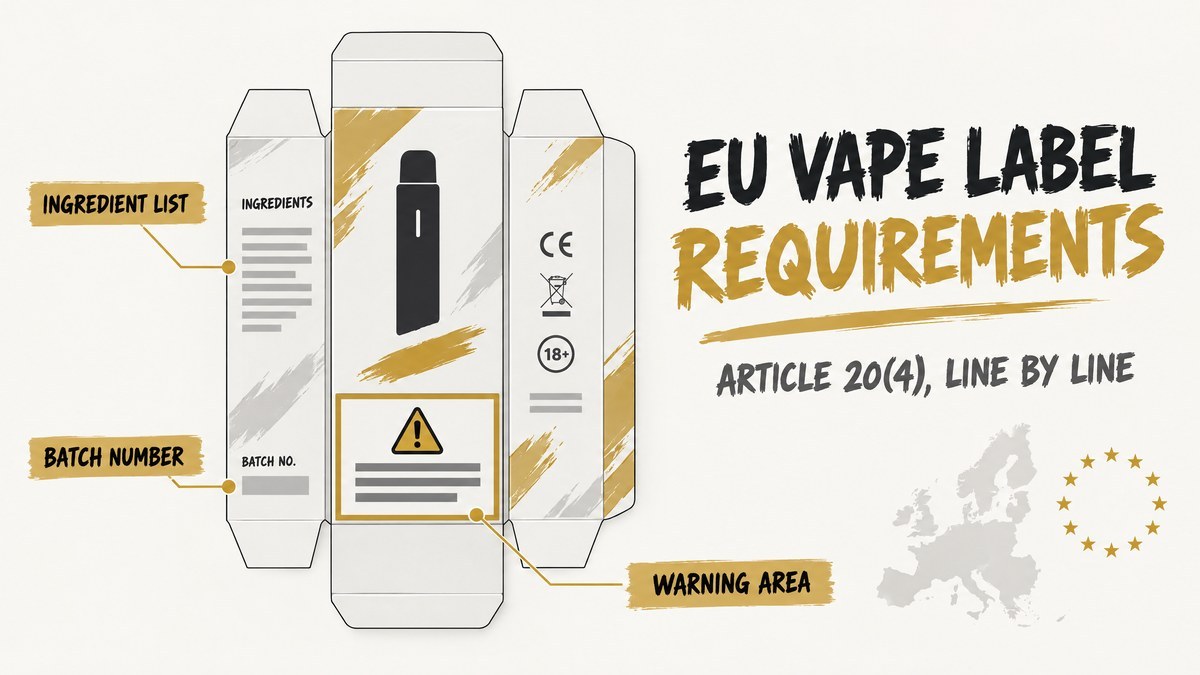
| Polish-language labels and warning wording | Content is EU-fixed; the language is a Member State choice. | The Polish authority named in the transposition; a Polish regulatory translator. | Signed artwork proof, prescribed warning text, SKU version number. |
| Excise duty and excise registration number | Excise is national; the TPD sets no rate or number. | A Polish tax advisor registered for excise; the national excise office. | Dated written rate confirmation, the invoice number, filed duty receipts. |
| National notification beyond EU-CEG | Article 20(2) fixes the six-month dossier; states may add an acknowledgement or fee. | The Polish authority designated for tobacco notifications. | National filing acknowledgement, fee receipt, EU-CEG ID cross-referenced. |
| The competent authority itself | The addressee of the six-month notification and Article 20(7) data is named nationally. | The transposition text and the authority’s published contact point. | A one-page sheet: legal name, portal, contact, confirmation date. |
| Distance and cross-border sales | Article 20 does not harmonise online selling; states may require registration. | The market surveillance contact point; the national e-commerce registrar. | Distance-sale registration, 18+ age-gate screenshot, reviewed terms of sale. |
| Advertising and promotion limits | The TPD bans pack promotions; the domestic perimeter is national. | The consumer-protection contact point named in the transposition. | Approved copy log; artwork with promotional elements struck through. |
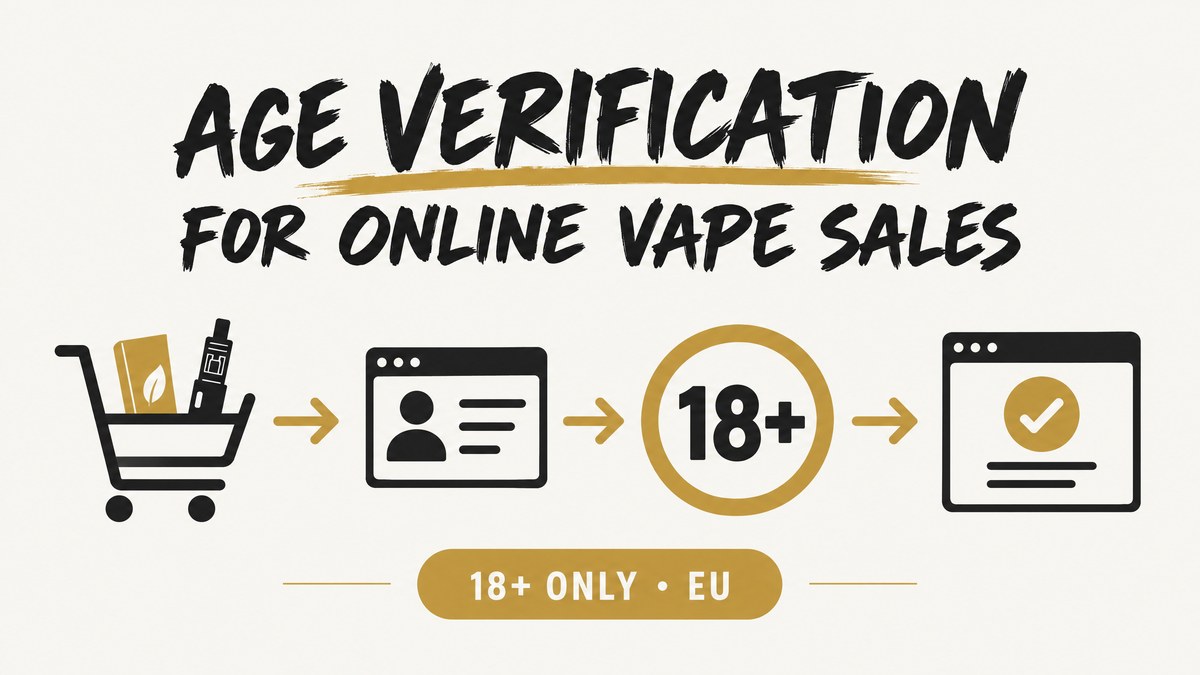
| Age verification (18+) | The 18+ gate is fixed for the trade; proving age at distance sale is national. | The Polish authority responsible for distance-sale age checks. | Age-verification workflow, provider contract, logged test transaction. |
| Invoicing and record retention | Invoice fields and retention periods come from national tax law. | A Polish accountant; the national tax administration. | Invoice template with excise fields, retention schedule, archived batch-level sales file. |
An eight-step pre-market checklist for Poland
Work in order; each step ends with a named artefact. Cross-check upstream documents against the supplier due diligence checklist before step three.
- Step 1 — Read the transposition. Deliverable:
PL-transposition-notes.pdf, dated, covering notification, language, excise, distance sales and advertising. - Step 2 — Name the authority. Deliverable:
PL-authority-sheet.pdfwith legal name, portal, contact and confirmation date. - Step 3 — File the Article 20(2) notification six months ahead. Deliverable: the EU-CEG submission ID plus the separate national acknowledgement.
- Step 4 — Get the excise figure in writing. Deliverable:
PL-excise-confirmation.pdf, signed and dated by a registered Polish tax advisor, with the registration number. - Step 5 — Rebuild artwork in Polish. Deliverable:
PL-artwork-v1.pdfper SKU, with prescribed warning wording and translator sign-off. - Step 6 — Build the leaflet. Deliverable:
PL-leaflet-v1.pdfper SKU covering the content blocks below. - Step 7 — Set the age gate and distance-sale registration. Deliverable:
PL-agegate-test.logwith a recorded 18+ test transaction, plus the certificate. - Step 8 — Freeze batch and invoice template. Deliverable:
PL-batch-register.csvand a signed invoice template carrying the step-four excise fields.
Polish-language labels and the leaflet the pack must carry
What the Polish text has to cover
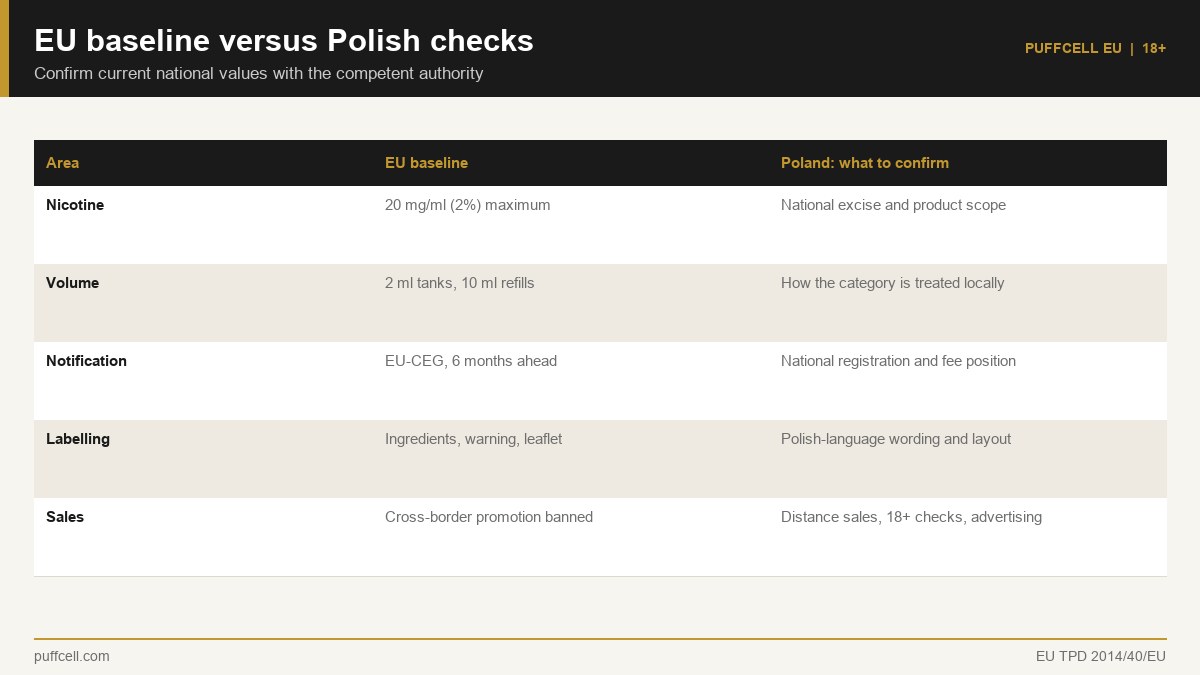
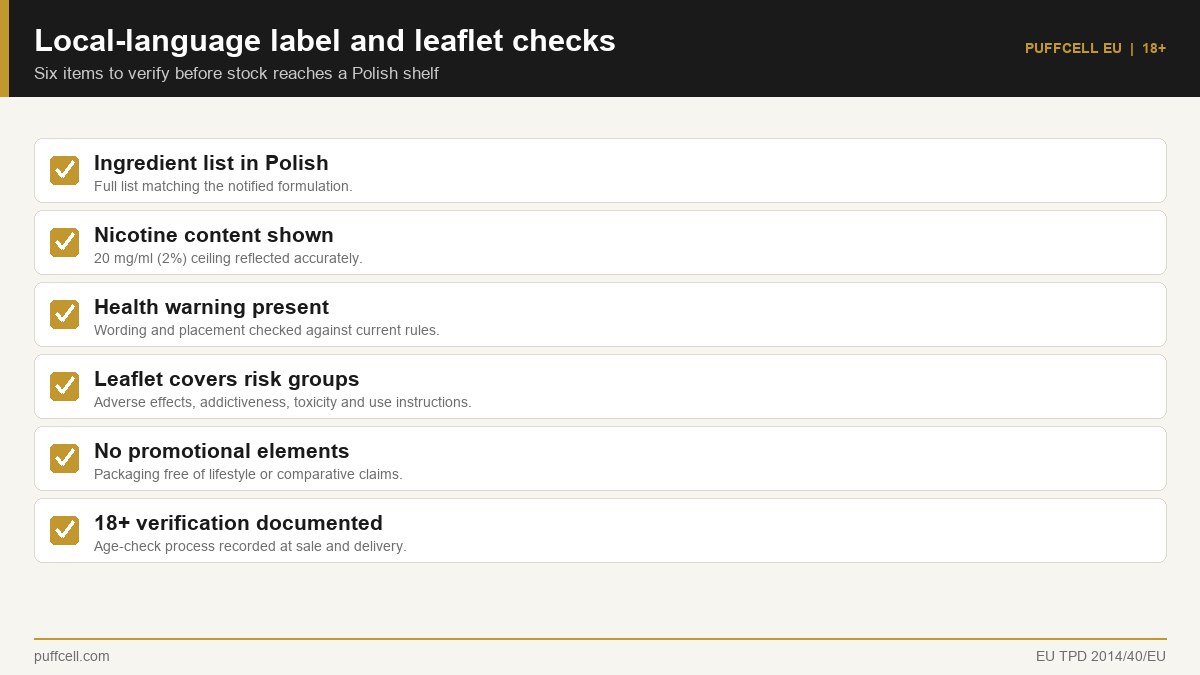
The content list is EU-fixed even though the language is not. Pack and leaflet carry the full ingredient list, nicotine content expressed as 2%, instructions for use, adverse reactions, risk groups, addictiveness and toxicity information, and the health warning. Promotional elements and cross-border advertising are prohibited. Generate the leaflet per SKU: a single line such as the QQbang 200k Hookah product page gets its own Polish version number, because its ingredient list differs from the next line. Keep the 2% declaration identical across versions.
Why an English leaflet cannot be reused
Language is a Member State choice; for Poland it is Polish. An English leaflet fails three ways: the warning must appear in prescribed national wording, the instructions and adverse-reaction terms reach a consumer with no obligation to understand English, and toxicological vocabulary drifts under machine translation. Commission a Polish regulatory translator, keep a signed declaration against the source, and log each version to its SKU. The 2% figure and Article 20(3)(a) volumes stay fixed; the prose does not.
Excise duty, the tax number and how to confirm the current figure
No rate or fee belongs in a supplier’s catalogue. The figure is published by the national authority; the artefact is a written confirmation from a registered Polish tax advisor, not a verbal quote or last season’s spreadsheet. Ask in writing for five things: whether the SKU is excisable, the current rate, the invoice excise number, the filing cadence, and the duty-paid evidence at release. Date-stamp the reply.
Who to ask and what to file
- The signed
PL-excise-confirmation.pdf, with the confirmation date visible. - The excise number on the invoice template, reconciled against the authority’s register.
- Filed duty receipts per consignment, linked to the batch ID in
PL-batch-register.csv. - A retention schedule from a Polish accountant for invoices and duty proofs.
- The Article 20(7) annual sales-volume data, so tax and notification files reconcile.
Batch numbers, documents and recall traceability
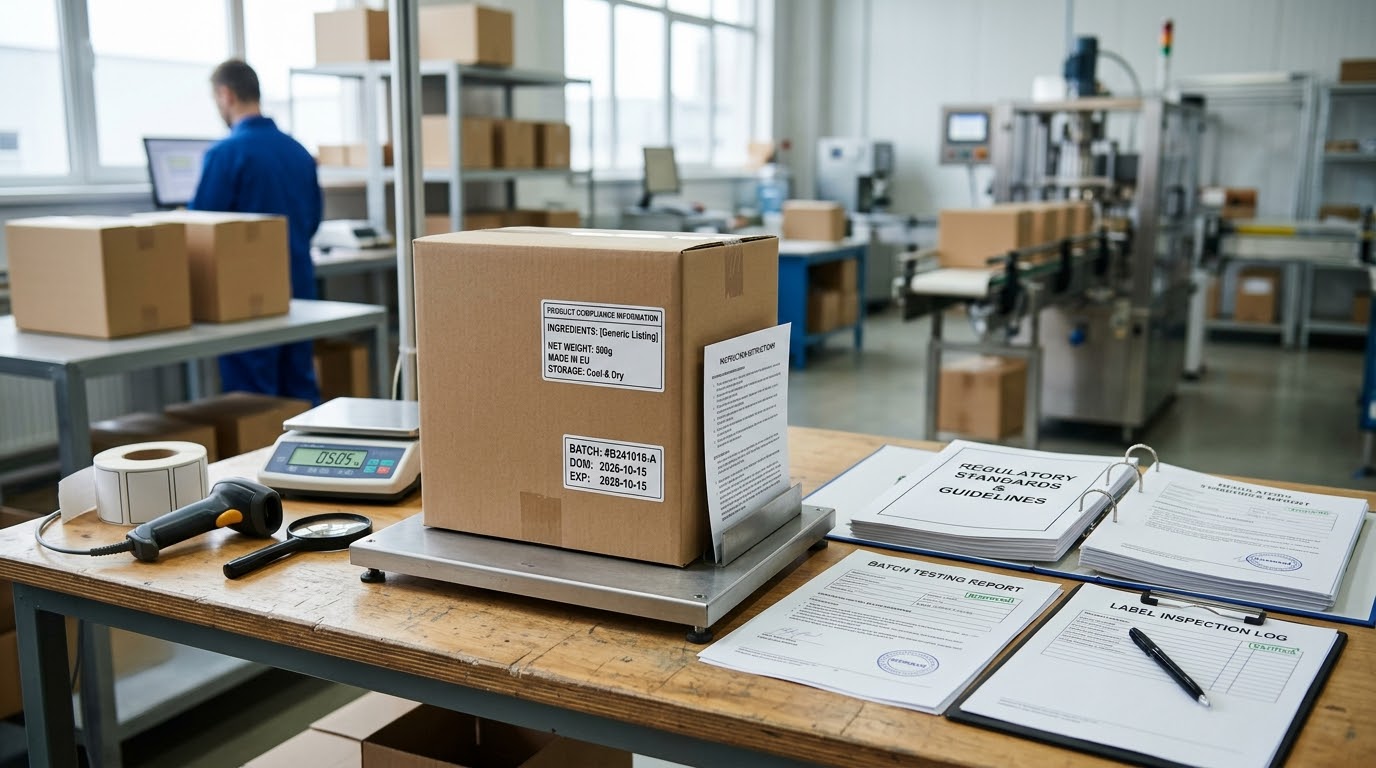
A Poland-bound consignment carries the batch identifier on the carton, invoice and delivery note. PL-batch-register.csv maps it to SKU, production date, EU-CEG and national notification IDs, Polish artwork version and recipient. Freeze the register before dispatch. Align field names with the logistics, customs and traceability guide; a batch ID formatted differently in the warehouse and on the invoice is the commonest reason a recall stalls.
Linking a batch ID to a recall
Article 20(9) requires collecting suspected adverse-effect information and corrective measures. The register turns a report into a scoped action: filter by SKU and production date, pull the recipient list, attach the corrective measure to the same row. The recall file then holds the batch list, recipient list and action taken, with nothing reconstructed from memory. Store it beside the six-month Article 20(2) dossier.
Common failure points on Poland-bound consignments
- English-only warning on the carton. Warning and leaflet are in Polish; retain a translator-signed proof per SKU.
- Excise number missing from the invoice. Populate the field from
PL-excise-confirmation.pdf, never a previous consignment. - EU-CEG ID treated as national approval. The six-month Article 20(2) notification and the national acknowledgement are two documents.
- One leaflet shared across SKUs. Each line carries its own Polish version, version number and ingredient list.
- Age gate not evidenced at distance sale. Log an 18+ test transaction in
PL-agegate-test.logbefore launch. - Batch register opened after dispatch. Freeze it beforehand, so a recall can be scoped from the invoice alone.
These are the same headings used in the supplier due diligence checklist and the product documentation retailer checklist. Build the Poland file once, then let the EU vape wholesale compliance guide hold the country files together.
FAQ
Does an EU-CEG submission cover Poland, or do I need a national notification too?
Article 20(2) of Directive 2014/40/EU requires notifying each Member State’s competent authority six months before market placement. EU-CEG, under Commission Implementing Decision (EU) 2015/2183, is the common data format, not an approval. Poland’s transposition may add a national acknowledgement or fee; file both the EU-CEG ID and the national receipt, cross-referenced.
Which nicotine and volume limits apply to a Poland-bound order?
The EU floor travels with the goods: Article 20(3)(b) caps nicotine-containing liquid at 20 mg/ml (2%), and Article 20(3)(a) caps tanks at 2 ml and refill containers at 10 ml. These do not change at the Polish border. National transposition may add a flavour restriction, so the 2% declaration stays fixed while the flavour list is confirmed separately. All trade is 18+.
Can I reuse the English leaflet on Polish shelves?
No. The TPD requires an ingredient list, nicotine content, instructions, adverse reactions, risk groups, addictiveness and toxicity information, and a health warning; language is set by the Member State of sale. For Poland that means Polish text on pack and leaflet, with the warning in prescribed national wording. Keep a translator-signed proof per SKU: the 2% figure stays identical, the prose does not.
How far in advance must the first Poland consignment be notified?
Six months before market placement, per Article 20(2). The dossier carries the ingredient list, emissions data, toxicological data, nicotine dose and uptake, and a description of the device and production process. After launch, Article 20(7) requires annual sales-volume data; Article 20(9) covers suspected adverse effects. The directive entered into force on 19 May 2014 and applied from 20 May 2016.
What excise paperwork belongs with a Polish wholesale invoice?
The invoice carries the excise registration number, SKU-level lines and the duty-paid reference, all taken from a dated written confirmation by a registered Polish tax advisor, not a previous consignment. No rate or fee belongs in a supplier’s catalogue; the national authority publishes those. Keep the confirmation, duty receipt and retention schedule beside the Article 20(7) annual data for an 18+ audit.
What has to be on a Poland-bound carton for an 18+ sale?
The Polish-language health warning, ingredient list, 2% nicotine declaration, leaflet reference and batch identifier. The refill mechanism must be child-resistant, tamper-evident and leak-free under Commission Implementing Decision (EU) 2016/586; packs carry no promotional elements because the TPD prohibits cross-border advertising and promotion. The 18+ gate is logged at distance sale. That batch ID links the carton to the recall register.
Next steps
Build the Poland file from the eight steps, then send the outstanding items — authority sheet, signed excise confirmation and Polish artwork proof — to our team. We will map them against the lines you list, including the hookah-style device in the catalogue, and return one consolidated gap list. Contact PuffCell EU for the Poland pre-market checklist, or read the FAQ for the conventions behind it.
Last reviewed: 5 November 2026
Shop the range
Looking for the devices these guides are about? These models are currently in stock and ship from our EU warehouse.